How AI Is Changing Jobs:
What You Need to Know
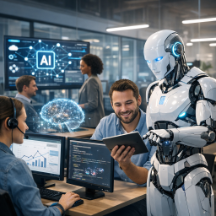
Artificial Intelligence (AI) is transforming the workplace. It’s great at doing repetitive tasks, analyzing data, and even chatting with people. But what does that mean for jobs?
🚨 Jobs Most at Risk
AI is likely to replace jobs that involve routine, repetitive tasks. Here are some examples:
| Job at Risk | Why It’s at Risk | New Opportunities |
|---|---|---|
| Data Entry Clerk | AI can process data faster and more accurately | Data Quality Analyst, Automation Supervisor |
| Customer Service Rep | Chatbots can answer common questions 24/7 | Chatbot Trainer, Customer Experience Specialist |
| Translator/Interpreter | AI can translate many languages instantly | Localization Expert, AI Language Trainer |
| Factory Worker | Robots can assemble products without breaks | Robotics Technician, Automation Engineer |
| Driver (Truck/Taxi) | Self-driving vehicles are becoming more common | Fleet Manager, Remote Vehicle Operator |
| Cashier/Fast Food Worker | Self-checkout and AI ordering systems are on the rise | Automation Attendant, AI Kitchen Technician |
| Writer/Journalist | AI can write basic articles and reports | AI Content Editor, Creative Strategist |
✅ Jobs That Are Safer
Jobs that require human skills like empathy, creativity, and physical ability are harder for AI to replace. These include:
- Teachers
- Nurses and Doctors
- Firefighters and Police Officers
- Electricians and Plumbers
- Therapists and Social Workers
🌟 New Jobs Created by AI
AI isn’t just taking jobs—it’s also creating new ones! Some of the fastest-growing roles include:
- AI Engineer or Developer
- AI Ethicist (makes sure AI is used responsibly)
- AI Solutions Analyst (helps companies use AI effectively)
- Robotics Maintenance Technician
- AI Content Editor
💡 What This Means for You
AI is changing what work looks like. Some jobs will disappear, but many will evolve or be created. The best way to prepare? Focus on skills that AI can’t easily copy—like creativity, problem-solving, teamwork, and emotional intelligence. Learning how to work with AI tools will also give you a big advantage in the future job market.