
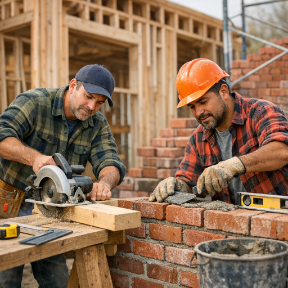
Building Your Future: Starting a Career in Construction (U.S.)
Thinking about a hands-on career where you can build a solid future without a four-year college degree? The construction field offers multiple paths for middle and high school students to jump-start rewarding careers. In the United States, skilled construction trades are in high demand, with many roles offering good pay, job security, and room for advancement. This blog-style guide will walk you through how to get started in construction (excluding electrical trades), the training and education options available, how you can advance over time, and what you might earn at each stage. It’s written for students and parents looking to explore construction careers like carpentry, plumbing, HVAC, masonry, heavy equipment operation, roofing, and more.

Getting Started: Education & Training Pathways
One great thing about construction is that there’s more than one way to enter the field. Here are the most common education and training pathways to kickstart a construction career:
- High School Courses & Vocational Programs: If available, take shop class, woodworking, or any construction technology classes in high school. Many schools offer Career and Technical Education (CTE) programs where you can learn basics of carpentry, welding, or drafting. These courses give you a head start by teaching tool use, safety, and basic construction skills. They also help you decide which trade interests you most.
- Trade Schools & Community Colleges: After (or even during) high school, you can enroll in a trade school or community college program focused on construction trades. For example, there are 1–2 year programs in carpentry, HVAC (Heating, Ventilation, and Air Conditioning) technology, plumbing, masonry, or heavy equipment operation. Trade schools combine classroom instruction with hands-on practice. Certification programs (like those by the National Center for Construction Education and Research, NCCER) can give you recognized credentials in a specific skill. Completing a trade program can make you job-ready and sometimes line you up with entry-level job placements or apprenticeships upon graduation.
- Apprenticeships: An apprenticeship is often called the “earn while you learn” model, and it’s a common entry point into construction careers. As an apprentice, you work under experienced professionals (often called journeymen) while also taking formal classes (usually at night or in short stints). Apprenticeships typically last 2 to 5 years, depending on the trade. During this time, you’re a paid employee – starting at a percentage of the full pay rate and getting raises as you progress. By the end of the apprenticeship, you’ll have logged thousands of hours of on-the-job training and completed required classroom instruction, qualifying you as a fully trained journey-level worker in your trade. Apprenticeships are available in carpentry, plumbing, HVAC, masonry, heavy equipment operation, roofing, and most other construction trades. They can be found through local unions, contractor associations, or company-sponsored programs.
- Entry-Level Helper Jobs: Another way in is simply starting as a construction laborer or helper after high school. Many contractors hire young workers as assistants (helpers), where you support skilled tradespeople with tasks like carrying materials, prepping job sites, or cleaning tools. This is a direct way to learn on the job and observe different trades in action. Over time, helpers often get a chance to specialize – for example, a helper on a plumbing crew might be offered a chance to start a plumbing apprenticeship if they show interest and aptitude. Keep in mind, starting as a general laborer might pay less at first, and you won’t have the structured learning that an apprenticeship provides. However, it’s a foot in the door if other avenues aren’t available, and hard workers can still advance by gaining experience and taking trade classes part-time.
- Military Training: The U.S. military also trains people in construction-related jobs (like Army engineers or Navy Seabees). After service, veterans can transition to civilian construction careers with the skills they learned. If you’re considering military service, this can be a way to get free training in trades such as heavy equipment operation, carpentry, or plumbing, along with leadership experience.
No matter which path you choose, safety training is essential. Expect to take OSHA safety courses early on, learning how to work safely on construction sites. Basic certifications (like OSHA 10 or 30-hour safety cards, first aid/CPR, or specific equipment operation licenses) can make you more attractive to employers and keep you safe at work.
Climbing the Ladder: From Entry-Level to Advanced Roles
Construction careers typically follow a clear progression. Here’s how you can advance over time:

Throughout your career, continuous learning is key. New building materials, techniques, and technology (like advanced power tools or even construction robotics) are always emerging. Adding skills – such as learning to read blueprints, gaining a certification to operate cranes, or taking a course in project management – can pave the way for promotions and specialization. The good news is that construction careers are flexible: you can start at the trade level and later decide to pursue more training or even a college degree (for instance, some tradespeople later get a construction management degree or become building inspectors). There’s no single “right” path – your progression will depend on your interests, talent, and willingness to work hard.
Show Me the Money: Earnings at Each Stage
One big advantage of construction jobs is that you don’t have to wait until you’re older to start earning. Here’s a breakdown of potential earnings as you grow in the field. (Keep in mind these are approximate national averages – actual pay will vary by region, employer, and economic conditions. Urban areas or union jobs might pay more, while entry-level jobs in smaller towns might pay a bit less.)
| Career Stage | What You Do | Typical Earnings (Annual) |
| Helper/Laborer (Entry) | Assist skilled workers; basic manual labor | ~$25,000–$35,000 (entry level) |
| Apprentice | Learn a trade under supervision (paid training) | ~$30,000–$40,000 to start, with raises as skills increase |
| Journeyman (Skilled Worker) | Fully trained tradesperson (e.g., licensed plumber, certified HVAC tech) | ~$45,000–$60,000 (median around $50K in many trades) |
| Foreman/Crew Leader | Supervise a crew; experienced specialist | ~$60,000–$75,000 (often hourly pay equivalent to ~$30–$36/hr) |
| Superintendent/Project Manager | Oversee entire projects or multiple crews; higher management | $80,000+ (can exceed $100K in large projects or with strong experience) |
| Business Owner (Contractor) | Run your own construction business (e.g., owning a roofing or plumbing company) | Varies widely (can be six-figure income if business is successful) |
Approximate figures above are in 2023 U.S. dollars. They combine data from the U.S. Bureau of Labor Statistics and industry sources for a general idea of earnings. For example, the median annual wage for carpenters is about $48,000 and for plumbers about $59,000, so a skilled tradesperson’s $50K median is a reasonable benchmark. Starting apprentices often earn around 50% of the journey-level rate, which works out to roughly $15–$20 per hour (about $30K–$40K/year), increasing as they gain experience.
As you gain experience, not only does your hourly rate go up, but you often get opportunities for overtime pay, which can boost your earnings further. Benefits can be a significant part of construction compensation too – many established employers or union jobs offer health insurance, retirement plans, and paid vacation, adding more value to the overall package.
Median annual wages by construction trade in the U.S. (approximate, as of 2022). “HVAC Tech” = Heating, Ventilation, and Air Conditioning technician. Plumbers (and related pipefitters/steamfitters) tend to earn the most among these examples, while carpenters, HVAC technicians, equipment operators, masons, and roofers earn similar mid-range incomes.
Choose Your Path: Construction Trades Overview (Excluding Electrical)
One of the exciting aspects of construction is the variety of specialties you can pursue. Below, we highlight some common career paths within construction (other than the electrical trades), each with its own focus and flavor. Consider these like different “majors” in the construction world – you might find one of them aligns with your interests and strengths:
- Carpentry: Carpenters are the woodworkers of construction. They build and install the frameworks that give structures their shape – think of framing walls for houses, constructing forms for concrete, installing doors and window frames, or building cabinets and wood fixtures. Carpentry is a core trade in almost every construction project. As a carpenter, you’ll learn to read blueprints, measure and cut wood (and other materials like drywall or fiberglass), and assemble structures with tools ranging from hammers and saws to power drills and nail guns. Pathway: Many carpenters start as apprentices or carpenter helpers. With experience, they can become lead carpenters, framing contractors, or construction supervisors. Earnings: Carpenters’ median wage is around $48K/year, but highly experienced carpenters or those running their own crews can earn more. [Trades AI Proof | Word]
- Plumbing: Plumbers install and repair pipes for water, gas, and sewage in buildings. They’re the ones who make sure clean water comes out of your faucets and toilets flush properly. This trade involves cutting and connecting pipes, troubleshooting leaks, installing appliances like sinks, showers, water heaters, or industrial piping systems. Plumbing often requires knowledge of local building codes and, as you progress, obtaining a plumber’s license (after apprenticeship) is typically required to work independently. Pathway: Usually entered via a plumbing apprenticeship (often 4-5 years). After becoming a journey-level plumber, you can specialize in areas like new construction plumbing, commercial systems, or residential service and repair. Some go on to become master plumbers or start plumbing businesses. Earnings: Plumbers are among the higher-paid construction trades; the median annual wage is about $59K in the U.S., and it can go much higher with overtime or specialties (for instance, working on oil pipelines or high-demand commercial projects). [Trades AI Proof | Word]
- HVAC (Heating, Ventilation, and Air Conditioning) Technician: HVAC technicians set up and fix heating and cooling systems – critical for comfort in homes, schools, offices, etc. If you choose HVAC, you’ll learn to install furnaces, air conditioners, ductwork, and ventilation fans, as well as troubleshoot electrical controls and refrigerant lines. It’s a bit of a cross-disciplinary trade: part electrician, part plumber, part electronics. Pathway: Often begins with a technical college program or apprenticeship specifically in HVAC. Certification is key – e.g., you need an EPA certification to handle refrigerants safely. As you gain experience, you might focus on either residential systems or large commercial HVAC systems, and eventually you could become a lead technician, HVAC contractor, or system designer. Earnings: HVAC techs have median earnings around $48K/year (comparable to carpenters) and experienced techs or those with multiple certifications (like in advanced refrigeration or system balancing) can earn more, especially if they take on supervisory roles.
- Masonry: Masons are experts in building with brick, stone, and concrete. They construct things like brick walls, chimneys, stone patios, tile floors, and concrete structures. Within masonry there are sub-specialties: bricklayers, stonemasons, cement masons, terrazzo workers, etc. If you enjoy working with your hands and creating something very solid and lasting, masonry might appeal to you. It’s physically demanding work – mixing mortar, laying heavy bricks or blocks, finishing concrete – but also quite artistic and satisfying when you see a finished wall or walkway you built. Pathway: Masonry can be learned through apprenticeships (e.g., Bricklayer apprenticeship) or on the job as a mason tender (helper). As you become a skilled mason, you can supervise a crew or focus on specializations (like ornamental stonework). Earnings: Median pay for masonry trades is typically in the $45K–$50K/year range (e.g., brickmasons around $47K). Highly skilled masons or those working on commercial projects can earn more, and there’s always demand for good masons since quality masonry is a craft.
- Heavy Equipment Operation: Do you get excited at the sight of a bulldozer or crane? Heavy equipment operators are trained to drive and control major construction machinery such as excavators, bulldozers, backhoes, cranes, graders, and paving machines. They literally move mountains (of dirt) to prepare sites for building roads, bridges, and buildings. Operators need a good sense of spatial awareness and safety, as they handle powerful machines to dig trenches, lift steel beams, or grade land. Pathway: Many start by attending an equipment operator school or apprenticeship (sometimes run by unions like the International Union of Operating Engineers). Others begin as laborers on a crew and get trained on simpler machines (like forklifts or skid-steer loaders) before progressing to larger equipment. Certifications or licenses are often needed for specific machinery (especially cranes, which have strict testing requirements). Earnings: Median wages for construction equipment operators are roughly $48K/year – similar to other trades. Operators often get plenty of overtime on big projects, which can boost pay. And operating specialized equipment (like tower cranes) in busy urban areas can command higher wages. Over time, an operator might become a site supervisor or ownership of equipment rental services.
- Roofing: Roofers install and repair the roofs of buildings, working with materials like asphalt shingles, metal panels, waterproof membranes, or tiles. They ensure that homes and structures are protected from the weather. Roofing is a trade that requires stamina (lots of climbing and working outdoors in heat and cold) and attention to detail (a leak in a roof can cause big problems). It’s often seasonal in colder climates, with peak work in spring and summer. Pathway: Roofing is commonly learned on the job – many start as laborers carrying materials up ladders, then learn to lay shingles and use roofing tools under a foreman’s guidance. There are also some apprenticeship programs for roofing. With experience, a roofer can become a crew leader or start a roofing contracting business. Earnings: Roofers’ median pay is about $47K/year in the U.S., but experienced roofers who specialize in complex or commercial roofs can earn more. Since roofing can be hazardous, companies often pay a bit extra for those with proven reliability and safety records. Owning a roofing business can be lucrative in areas with booming construction.
- Other Paths: There are many other specialties in construction – drywall installers, painters, glaziers (glass installers), ironworkers (steel construction), welders, flooring installers, heavy truck drivers, and more. All of these roles play a part in the construction ecosystem. For example, ironworkers who assemble steel beams for skyscrapers have a very high-skilled job (and median wages around $58K). Welders (who often work on steel structures or pipelines) can come from a trade school welding program and make about $47K median, with potential for more in industrial construction. The paths we described (apprenticeship, trade school, etc.) will apply similarly to these trades. If it’s part of building something, there’s a career path for it in construction!
Why Consider Construction? Benefits & Future Outlook
For students and parents weighing career options, here’s why construction trades can be a smart choice:
- Strong Job Outlook: The construction industry is growing in many parts of the U.S., fueled by the need to build housing, update infrastructure like roads and bridges, and retrofit buildings with new technologies. Skilled trade workers are retiring faster than new ones are entering, creating plenty of job openings. In fact, many contractors report difficulty finding qualified workers – your skills will be in demand. And unlike some jobs that might be outsourced or automated, construction work must be done on-site and is largely hands-on, making it more resistant to automation. As long as people need buildings, there will be jobs in construction. [Trades AI Proof | Word], [Trades AI Proof | Word]
- Earn Sooner, Avoid College Debt: College is a great path for some, but it comes with years of tuition and possibly student loans. In construction, you start earning right away – and training programs are often low-cost or even free (especially apprenticeships, which might only charge a small fee for classes). By the time your peers are graduating college, you could have five years of experience, a journeyman credential, and zero student debt – not to mention having earned an income during those years.
- Career Advancement and Entrepreneurship: Skilled trades can lead to self-employment and business ownership. If you dream of being your own boss, construction is a viable route: after gaining experience and any required licenses, you can launch your own venture (like a plumbing company, a custom home-building firm, or a landscaping and masonry business). Additionally, construction companies often promote from within – a crew member can become a foreman, then move into project management. Some even transition into related careers like construction safety officers, building inspectors, or instructors at trade schools. The hands-on knowledge you gain opens many doors.
- Active, Hands-On Work: For many people, the appeal of construction is that it’s not a desk job. If you enjoy working with your hands, being active, and seeing the tangible results of your work at the end of the day (like a finished house, a repaired school, or a newly paved road), construction can be incredibly fulfilling. There’s a pride that comes with saying “I built that.” The work is often team-oriented, so you’ll bond with crewmates and enjoy camaraderie on the job site. And while it can be physically demanding, most tradespeople stay in good shape and appreciate not being stuck behind a computer all day.
- Transferable Skills: Skills learned in construction are useful beyond the job site too. Understanding how buildings are made can help if you ever renovate your home. Trades like electrical, plumbing, and carpentry are practical life skills. Also, construction work develops problem-solving, project management, and coordination abilities. Many ex-tradespeople find that their experience benefits them in unrelated fields because they’ve learned how to manage projects, work safely, and think critically to solve real-world problems.
Final Tips for Students and Parents: If a construction career sounds intriguing, start exploring early. Talk to your school counselor about vocational programs, visit local construction sites or companies during career fairs, or even seek out a mentor (perhaps a family friend in the industry). Parents can support by encouraging hands-on projects at home (like building a treehouse or fixing things together) and valuing trade skills as much as academic ones. Remember, a successful career in construction still requires strong fundamentals – pay attention in math (you’ll use geometry and arithmetic often for measurements) and communication (you’ll need to read instructions and talk with teammates).
The construction field is broad and full of opportunities. Whether you imagine yourself framing the next skyscraper, installing environmentally friendly HVAC systems, or running a team that builds family homes, there’s a path for you to get there. With dedication and hard work, you can advance from a beginner to a seasoned pro, enjoying a career that builds America’s future (and a sturdy future for yourself, too).
Start building your dream – one plank, one pipe, or one brick at a time!

