
Becoming a Firefighter in the U.S.: A Guide for Students & Parents
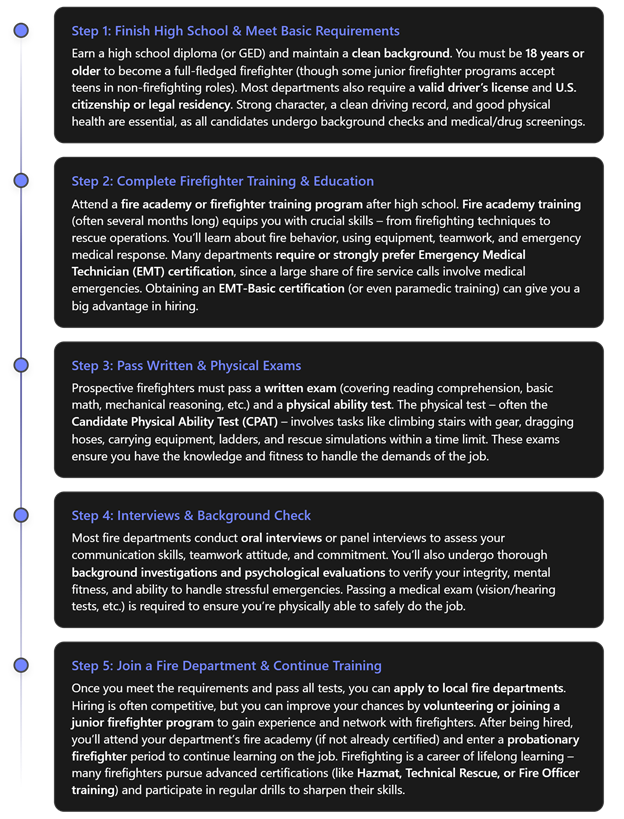
Becoming a firefighter in the United States is an achievable goal for motivated, service-minded young people. While requirements vary by state, most firefighters must meet core minimum qualifications – such as being at least 18 years old and a high school graduate (or GED holder) – and complete specialized training before joining a fire department. This one-page overview explains the key steps to become a firefighter, highlights a few state-specific requirements (with examples from Florida and other states), and outlines the major benefits of a firefighting career for you and your family.
State-Specific Requirements and Benefits
While the general path to firefighting is similar across the country, each state (and even each city) can have unique requirements or hiring practices. The table below compares some key requirements and benefits for firefighters in Florida and two other large states, Texas and California:
| State | Key Requirements (beyond national basics) | Salary & Benefits (approximate) |
| Florida (FL) | • State Firefighter I/II Training & Certification: Must complete Florida’s Firefighter Minimum Standards Course (≈398 hours of training) and pass state written/practical exams. • EMT Certification: EMT-Basic certification is often required by Florida fire departments (overseen by FL Dept. of Health). • Other: Pass Florida background check; tobacco use is prohibited for new firefighters (Florida law requires candidates to be tobacco-free). | • Average Pay: ~$41,000/year (Florida firefighters’ average salary) . Urban departments (e.g. Miami) may offer higher starting salaries (mid-$40k+). • Retirement: Eligible for Florida FRS Special Risk pension (can retire after ~25 years with ~75% of salary as pension). • Healthcare: State/municipal employee health insurance; line-of-duty injury protections. |
| Texas (TX) | • State Certification: Must earn Basic Firefighter certification from Texas Commission on Fire Protection (complete a TCFP-approved fire academy and pass state exam). • EMT Certification: EMT certification is mandatory (Texas requires at least EMT-Basic; many departments prefer Paramedic license). • Other: Fingerprint background check with strict clean record requirements some cities (e.g. Houston) ask for 15–30 college credits or military service (waivers possible) Texas has an upper age limit (often ~35) for new firefighters in many jurisdictions. | • Average Pay: ~$38,000/year (statewide average) but starting salaries vary widely. Big city departments (Dallas, Houston, etc.) often start around $55k–$60k, with some offering ~$75–$80k for rookies with paramedic certification. • Retirement: Membership in local or state firefighter pension (e.g. Texas Municipal Retirement System); 20–25 year service for full pension is common. • Healthcare: Typically includes comprehensive health insurance and disability coverage for injuries. |
| California (CA) | • Firefighter I Certification: Complete a state-approved fire academy for California Firefighter I certification (includes wildland fire and hazmat modules). • EMT/Paramedic: EMT certification is standard; many large CA departments require paramedic licenses or EMT-Paramedic within a certain time of hiring. • Other: Must pass the CPAT physical test; some city departments (e.g. LAFD, SFFD) have additional steps like civil service exams and may require residency in the region. | • Average Pay: ~$43,000/year (statewide average), but higher in metro areas (e.g. Los Angeles, San Francisco) due to higher living costs. Seasoned firefighters in big cities can earn well above $100k with overtime. • Retirement: CalPERS or local city pension systems (common 20–30-year retirement plans with defined benefits). • Healthcare: State law mandates occupational safety protections; firefighters typically receive health insurance and injury/disability benefits, plus union-negotiated benefits packages. |
Note: These examples highlight only a few differences. Always check your local fire department or state fire marshal’s office for the exact requirements in your area.
Key Benefits of a Firefighting Career
A firefighting career comes with many personal and financial rewards beyond the pride of serving the community. Here are some of the key benefits that make this profession attractive to many young people:
- Competitive Salary: Firefighters earn a solid middle-class income. The U.S. median annual wage for firefighters is about $59,500, and entry-level salaries often range from roughly $35,000–$60,000 depending on location. In higher-cost areas or with experience and overtime, firefighters can earn significantly more (for example, an FDNY firefighter’s annual pay can exceed $100,000 after five years with overtime).
- Job Security: Firefighting offers high job stability. It is an essential public service, so firefighters are always in demand, with a 3% job growth projected over the 2024–2034 decade. Fire departments also tend to provide strong job protections (e.g. union support, due process in disciplinary actions) and generally low unemployment rates in the field.
- Retirement Benefits: Most career firefighters have excellent retirement plans. They typically qualify for a pension after about 20–25 years of service, meaning they can retire relatively young with a steady lifetime income. For example, Florida firefighters in the Special Risk pension category can retire with ~75% of their salary after 25 years.
- Healthcare Coverage: Firefighters (as public employees) usually receive comprehensive health insurance for themselves and their families. This includes medical, dental, and often vision coverage. Given the risks of the job, there are also strong provisions for injury compensation and disability coverage if a firefighter gets hurt or falls ill due to the job.
- Advancement Opportunities: The fire service has a clear rank structure and many chances for growth. Firefighters can be promoted to roles like Engineer/Driver, Lieutenant, Captain, Battalion Chief, etc., which come with higher pay and leadership responsibilities. Firefighters may also specialize in areas such as hazardous materials response, fire investigation, training officer roles, or emergency medical services (becoming a paramedic or fire medic), providing varied career paths over time.
In summary, a firefighting career path typically starts with meeting basic requirements in high school, followed by firefighting and EMT training, passing exams, and joining a fire department. For high school students, staying physically fit, maintaining good grades and character, and exploring cadet or volunteer firefighter programs can set you on the right track. Firefighting is a challenging but rewarding occupation that offers not only the excitement of teamwork and public service, but also tangible benefits like a reliable salary, excellent benefits, and a proud, stable career serving the community. Good luck on your journey to becoming one of America’s Bravest!