Building Your Future: Starting a Career as a Heavy Equipment Operator 🚜
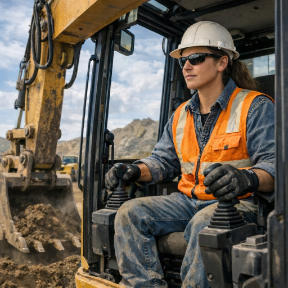
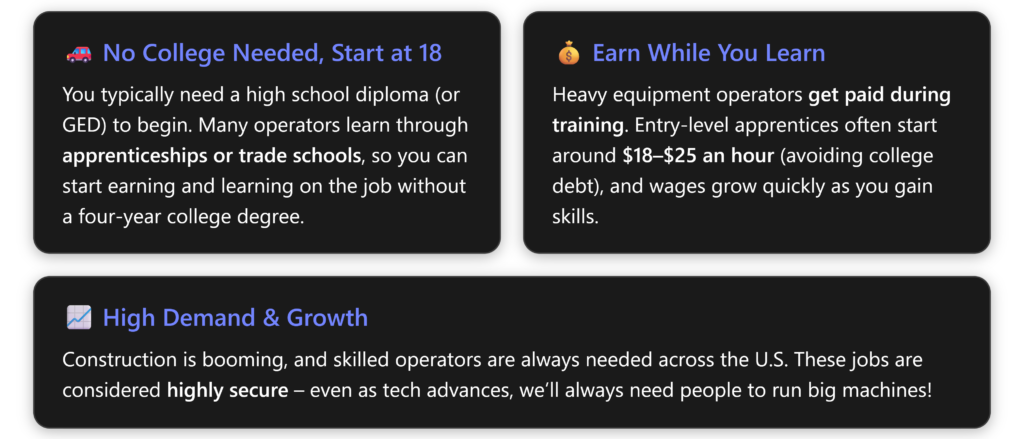
Ever wonder who operates those giant bulldozers, cranes, and diggers at construction sites? It could be you in a few years! A career as a heavy equipment operator means driving the big machines that build our roads, schools, and stadiums. The best part? You can start this path right after high school, and it offers solid pay, exciting work, and lots of ways to grow. Below, we’ll cover how to get started, how to advance, what you can earn at each stage, and the different paths this field can lead to – all in a friendly guide for students and parents.
What Does a Heavy Equipment Operator Do?
Heavy equipment operators drive and control massive construction machines. This includes excavators that dig foundations, bulldozers that push tons of earth, cranes that lift steel beams high into the air, and loaders and paving machines that build highways. If you’ve played with construction toys or enjoyed simulation video games, imagine doing that in real life – you’d be moving dirt, rocks, and materials to literally build the world around you. Operators work on projects like roads, bridges, buildings, and pipelines, often outdoors and as part of a team. It’s a hands-on job where you won’t be stuck behind a desk. Instead, you get to be out in the field, using powerful machines to make things happen.
Safety and skill are key parts of the work. You’ll learn how to inspect your equipment, follow safety rules, and coordinate with coworkers on busy job sites. Over time, you might specialize in certain machines – for example, some operators focus only on cranes or only on paving equipment. No two days are exactly the same, which keeps the job exciting and challenging.
So, how do you go from being a student to a professional heavy equipment operator? Here’s a step-by-step look at the journey:
Steps to Get Started and Advance
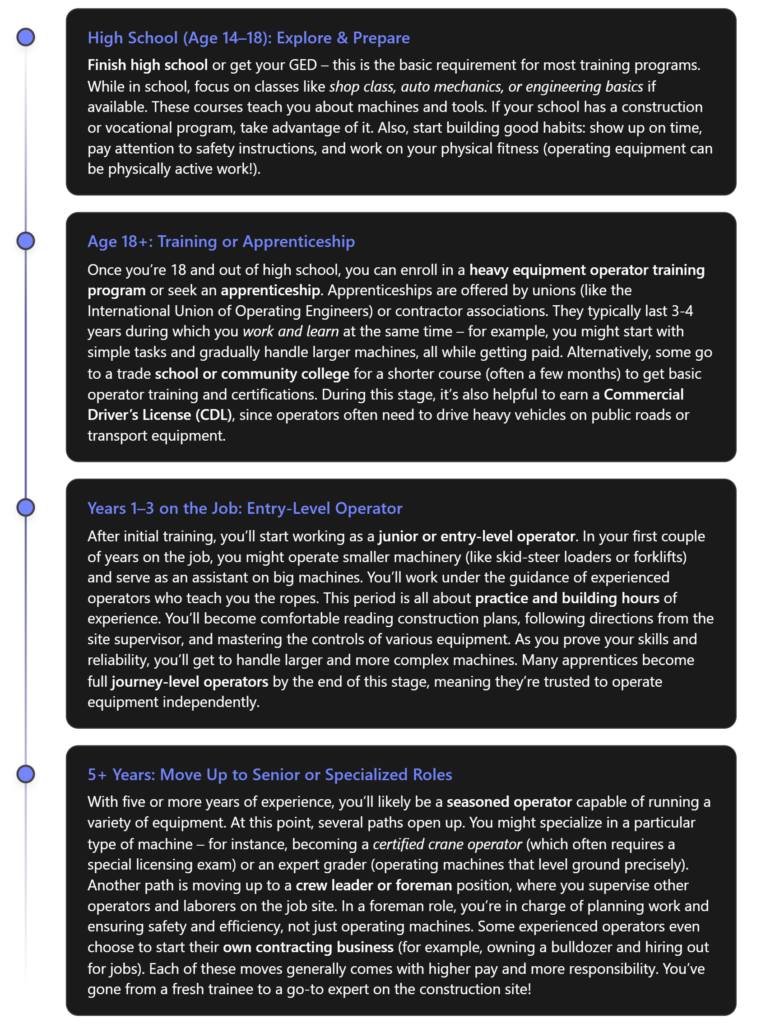
As you follow these steps, remember that learning never really stops. Even experienced operators continue taking safety courses and training on new equipment throughout their careers. Technology in construction is always evolving – for example, today’s machines often have GPS and computerized controls to help with precision digging or grading. Staying up-to-date on these tools can make you even more valuable and effective at work.
Show Me the Money: Earnings at Each Stage
One big question students (and parents) have is: How much can you earn in this field? The answer generally is “quite a lot, and it grows with experience.” Heavy equipment operators are well paid because they have a specialized skill and their work is crucial to big projects. While salaries can vary by location and the specific type of equipment, here’s a rough idea of potential earnings as you progress:
- Starting Out (Apprentice/Junior Operator): Typically around $35,000–$45,000 per year to start, which comes out to roughly $18–$22 per hour. Remember, this is while you’re still learning the job. It’s a solid entry wage, especially considering many apprentices have little to no student debt (you’re earning money instead of paying for four years of college tuition).
- Mid-Career (Fully Proficient Operator): After a few years, many operators earn about $50,000–$60,000 per year. That’s roughly in the $25–$30 per hour range, and often more if you work overtime hours (construction projects often pay overtime, which can significantly boost your income).
- Experienced/Specialized Operator: With greater experience or special skills (like crane operation or operating very large equipment), you might make $65,000–$80,000+ per year. For example, operating engineers on major infrastructure projects or in cities can earn over $30 or $40 an hour, especially for complex or risky work. In some cases, experienced crane operators or those working in high-demand areas can even surpass $90,000 annually.
- Crew Leader/Foreman or Manager: If you advance to a supervisory role, your earnings will typically increase further. Foremen (leaders of a team of operators) often earn in the upper range (often in the ~$70k–$85k range), and construction managers (which some operators become later in their careers, sometimes after further education or training) can earn six-figure salaries. At this point, you’re valued not just for machine skills but also for leadership and project management abilities.
To visualize how an operator’s salary can grow, check out the chart below showing typical annual earnings at different career stages:
📊 Typical Earnings Growth in Heavy Equipment Operation
| Career Stage | Role Description | Approx. Annual Salary (USD) |
|---|---|---|
| Starting Out | Apprentice / Junior Operator | $35,000 – $45,000 |
| Mid-Career | Fully Proficient Operator | $50,000 – $60,000 |
| Experienced | Specialized Operator (e.g., Crane) | $65,000 – $80,000+ |
| Crew Leader / Foreman | Supervises team, plans site work | $70,000 – $85,000+ |
Figure: Approximate annual salary levels for heavy equipment operators, from entry-level to crew leader. Actual pay varies by region and project; with overtime or union rates, earnings can be higher.
In short, heavy equipment operation offers earn-as-you-learn income and a steady upward path. Even early in your career, you can make a comfortable wage. As you gain experience, your paycheck grows. Plus, the construction industry often provides benefits like healthcare and retirement plans, especially if you join a union or work for a larger company. The strong demand for operators means you can find opportunities across the country, from local home-building projects to large-scale national infrastructure jobs.
(Note: The figures above are general estimates for the U.S. As of recent years, the median annual wage for construction equipment operators is around $50,000, but your earnings can be lower or much higher depending on factors like experience, certifications, and location.)
Different Paths within Construction
Becoming a heavy equipment operator can open the door to many different roles in the construction field. It’s not a one-size-fits-all job – you can shape your career based on what you enjoy most. Here are a few paths and specializations you might explore over time:
- 🏗️ Specialist Operator: You might fall in love with a particular type of machine and specialize in it. For instance, some operators become full-time crane operators, running the tall cranes that swing steel beams and concrete panels into place high above the ground. Others might specialize in operating excavators (great for those who love digging and earthmoving) or paving machines to lay asphalt and concrete for new roads. Specializing often requires extra training or certification (crane operators, for example, often need a special license), but it can make you an expert in a niche and often comes with higher pay due to the specialized skills.
- **🔧 Heavy Equipment Mechanic or Technician: If you’re mechanically inclined, some operators transition into the maintenance side of things. Heavy equipment mechanics are the experts who repair and service the machines. Knowing how the equipment operates from firsthand experience is a big plus if you choose this path. It’s a way to stay close to the machines, with slightly cleaner hands (sometimes!). Mechanics and technicians are also well-paid and in demand, ensuring the bulldozers and cranes are in top shape.
- 👷 Crew Leader / Foreman: As mentioned earlier, with experience you might move into a supervisory role. A foreman or crew leader is responsible for a whole team on the construction site. In this role, you’d plan the day’s work, ensure everyone (and every machine) is in the right place at the right time, and maintain safety standards. You’re basically the captain of the construction team. This path is great if you have strong leadership skills or aspire to manage bigger projects.
- 📋 Construction Manager or Business Owner: Some heavy equipment operators take their career even further by becoming construction project managers or starting their own contracting businesses. As a project manager, you might oversee all aspects of a construction project (budget, scheduling, coordinating different teams) – this often requires additional education or moving up the ranks over many years. Alternatively, as an independent contractor or business owner, you could own equipment and hire a team to take on jobs (for example, starting an excavating company). This route carries more responsibility and risk, but it can be incredibly rewarding for those with an entrepreneurial spirit.
- 🏠 Other Construction Trades: It’s worth noting that once you’re in the construction industry, you’ll be exposed to many other trades (like carpentry, plumbing, electrical work, welding, etc.). Sometimes people start in one trade and discover an interest in another. The skills you learn as an equipment operator – understanding plans, working safely, operating tools – can provide a foundation to transition if you ever choose. However, many find operating heavy equipment to be such a unique thrill that they stick with it for the long haul!
Throughout any of these paths, the construction field offers a sense of camaraderie and pride. You get to be part of a team creating something real and lasting. Driving past a completed project and saying, “Hey, I helped build that,” is a fantastic feeling. And whether you stay an operator or move into management, you’ll have a valuable skill set that can anchor a stable career.
Final Thoughts: Digging into an Exciting Career
Starting out as a heavy equipment operator can be one of the most rewarding moves for students who love working with their hands, being active, and seeing the direct results of their work. You’re not just doing a job – you’re building schools that kids will learn in, roads that people will travel on, and homes where families will live. It’s a career of tangible accomplishments.
For middle and high school students reading this (and their parents), remember that there are many paths to success. College is a great route for some, but it’s not the only route. Heavy equipment operation is an in-demand profession across the United States that offers good pay, job stability, and growth without the need for an expensive degree. You can start earning as a young adult and keep developing your expertise over a lifetime. As you advance, doors open to higher positions and even other careers in construction. If playing in the dirt with big machines sounds like a dream come true, then this could be the perfect path for you. Talk to your school counselor about vocational programs, reach out to local construction companies or unions about shadowing opportunities, and keep learning about the field. With determination and the right training, in a few years you could be climbing up into the driver’s seat of a hulking piece of equipment, ready to help build something amazing. Your future in construction is yours to shape, lift, and build – one giant scoop at a time! 🚧👷♂️👷♀️
